
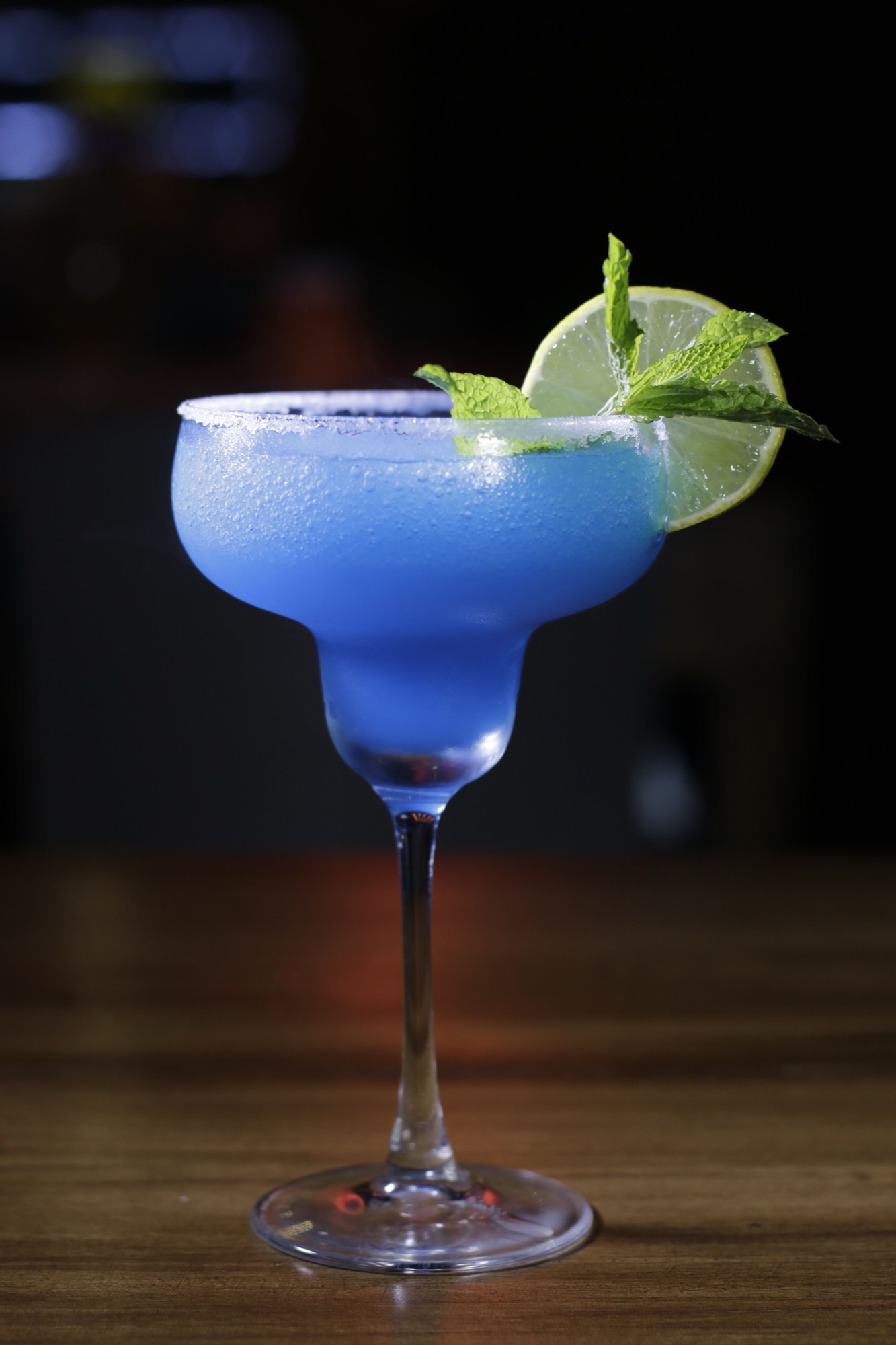
Only one drink carries the island’s name — and it is a brighter blue than the sea around it. Blue Curaçao is famous worldwide, but it is still made the proper way in just one place: at Landhuis Chobolobo, just outside Willemstad.
The laraha: an orange that grows nowhere else
The story begins not with a liqueur but with a failed harvest. Spanish colonists brought orange trees to Curaçao in the 16th century, but the dry, limestone soil shrivelled the fruit into something far too bitter to eat. What remained was the laraha: a small, green orange that grows only on this island, with a peel that turns out to be remarkably fragrant. Those peels are still removed by hand — traditionally with a wooden knife — and dried in the sun for five days before they make their way into the liqueur.
From Senior family recipe to export product
Around 1896, Edgar Senior worked out that something could be made from the essential oil in those peels. The Senior family recorded the recipe, formally established a company in 1945 and based production at Landhuis Chobolobo, where it still happens today. Senior remains the only brand in the world using genuine laraha — other “curaçao” liqueurs elsewhere are made with ordinary orange peel.
That distinctive blue colour, incidentally, has nothing to do with the taste: the liqueur was originally clear, and the blue was purely a clever marketing trick to stand out from the competition. These days it also comes colourless, orange and green, but blue remains by far the best known.
Visiting the distillery
Landhuis Chobolobo is open on weekdays (Monday to Friday, 8am–5pm) and is worth seeing in its own right: a 19th-century plantation house beside the salt flats of Willemstad. You can book a tour of the distillation process, taste the different varieties, join a cocktail workshop, have something to eat or a scoop of locally made ice cream, and pick up a bottle in the gift shop to take home.
The simplest way to enjoy it is still a cold glass over ice by the pool — but once you know how the laraha grows here, it tastes a little different.
Back to Curaçao Facts & Practical Tips.